Google's Orbital Leap: How Project Suncatcher is Testing AI in Space
When Google launched its first experimental satellite for Project Suncatcher aboard a SpaceX Falcon 9 rocket on October 1, 2026, it wasn't just sending hardware into orbit—it was testing a radical reimagining of where artificial intelligence infrastructure belongs. The fridge-sized satellite, dubbed Suncatcher-1, represents Google's moonshot effort to answer a deceptively simple question: Can AI computing eventually operate beyond the constraints of terrestrial data centers?
For years, the AI boom has been anchored to Earth. Massive data centers consume staggering amounts of electricity, require constant cooling, and need extensive grid connections. These facilities have become the physical backbone of the AI revolution, but they also represent significant limitations. Project Suncatcher explores whether space—a realm of abundant solar energy but extreme thermal challenges—could host at least portions of future AI infrastructure.
The satellite itself is modest by data center standards. Built in collaboration with satellite imaging company Planet, Suncatcher-1 carries Google's Tensor Processing Units (TPUs) specialized for AI workloads. Its primary mission isn't to process user queries or replace terrestrial data centers—at least not yet. Instead, it's a carefully designed experiment to test how these AI accelerators withstand the brutal realities of space: the violent forces of launch, constant bombardment by radiation, and extreme temperature swings that can range from -150°C in Earth's shadow to over 120°C in direct sunlight.
What makes this experiment particularly compelling is Google's approach. Rather than announcing plans for an orbital data center fleet, the company is treating Suncatcher as pure research. Google has published peer-reviewed work in the journal Joule detailing the satellite's thermal management systems, radiation shielding, and power optimization strategies. This transparency suggests Google views the project as foundational knowledge-building rather than an immediate commercial product.
The implications of success could reshape how we think about AI infrastructure. If AI accelerators can operate reliably in orbit, several intriguing possibilities emerge. Space-based AI nodes could leverage uninterrupted solar power without atmospheric interference, potentially offering more consistent energy generation than ground-based solar farms. They could also provide low-latency processing for space-based assets like Earth observation satellites, spacecraft, or future lunar and Martian bases.
Moreover, orbital AI infrastructure might help address growing concerns about the geographic concentration of computing power. Today, major data center clusters exist in specific regions with favorable climates, energy costs, and regulatory environments. Distributing some AI processing to satellites could create a more globally distributed network less vulnerable to regional disruptions—whether from natural disasters, geopolitical tensions, or localized power grid failures.
Of course, significant hurdles remain. The latency of communicating with orbit (though improving with laser-based inter-satellite links) still exceeds terrestrial fiber connections for many applications. Radiation hardening adds weight and complexity. And the very act of launching mass into orbit remains environmentally costly compared to expanding existing terrestrial facilities.
Yet Project Suncatcher represents something deeper than a technical experiment. It embodies a shifting mindset in the AI industry: the recognition that today's infrastructure assumptions may not serve tomorrow's needs. As AI models grow more capable and energy-hungry, the industry is being forced to confront uncomfortable truths about sustainability, scalability, and physical limitations.
Google's orbital test is ultimately about expanding the solution space. By proving AI hardware can function in space, even experimentally, the company is opening doors to architectural possibilities that once seemed purely science fiction. Whether future AI constellations orbit Earth, Lagrange points, or other celestial bodies remains to be seen. But for the first time, the infrastructure underpinning artificial intelligence is literally reaching for the stars.
As Suncatcher-1 continues its orbits, transmitting telemetry back to ground stations in California and beyond, it carries more than just TPUs and circuit boards. It carries the question of whether humanity's most ambitious technological endeavor—creating artificial intelligence—might one day extend beyond our planetary boundaries, following in the footsteps of exploration that has always defined our species' greatest advances.
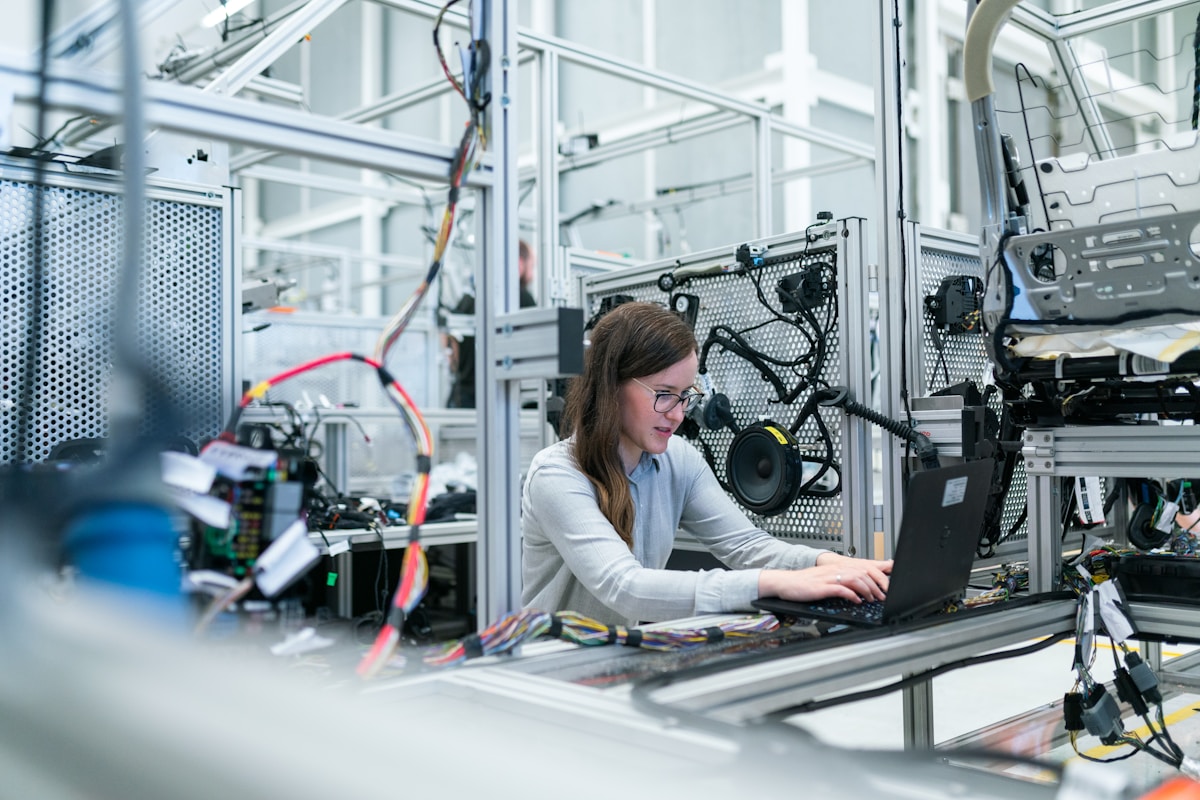
Photo by Nathana Rebouças on Unsplash